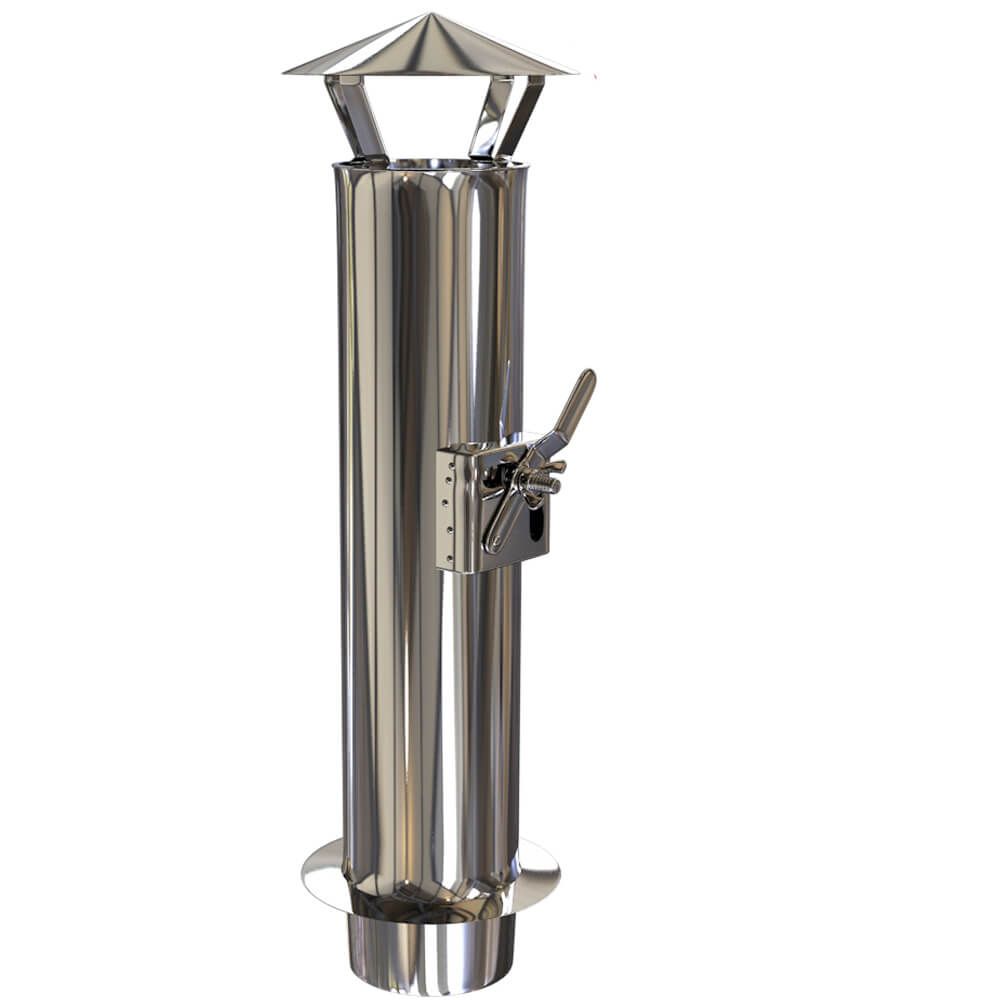
When dealing with a duct in the attic, the easiest mistake is treating thermal insulation as a complete protection for the passage through the ceiling. The correct solution is determined by the type of chimney, its markings, and the passage documentation. Simply wrapping the pipe does not create a complete partition protection.
Four errors worth eliminating
- Confusing the connecting pipe with the system chimney. The components may look similar, but they have different uses and installation conditions.
- Filling the required gap with any mat or mortar. The gap may have a specific function and must not be removed without confirmation in the documentation.
- Covering the connection before checking its condition. Insulation does not repair leaks, corrosion, or improperly chosen components.
- Omitting support and inspection access. The weight of the duct and the possibility of inspection must be taken into account before installing the cover.
Condensation does not only mean lack of insulation
Traces of moisture near the duct require determining the cause. Working conditions, the method of draining condensate, or the state of connections may be significant. Covering the trace with an additional layer will make later assessment more difficult.
Flue Cement chimney cement is intended for specific connections, not for repairing any chimney. It does not replace the factory gasket if the system requires such sealing. Similarly, ceramic mat is an insulating material, not automatically an approved kit for passing through a wooden ceiling.
What to prepare for a conversation with the installer?
Write down the manufacturer and designation of the flue, the type of appliance, and the location of the penetration through the barrier. Take photos of supports, connections, and materials adjacent to the chimney. Check if the instruction manual for the entire system is available, not just for a single pipe.
Based on this, a professional can select the spacing, the transitional element, and any insulation if necessary. There is no single mat thickness suitable for all cables. Penetrations through combustible barriers and connections of unknown condition require assessment before covering or commissioning the appliance.