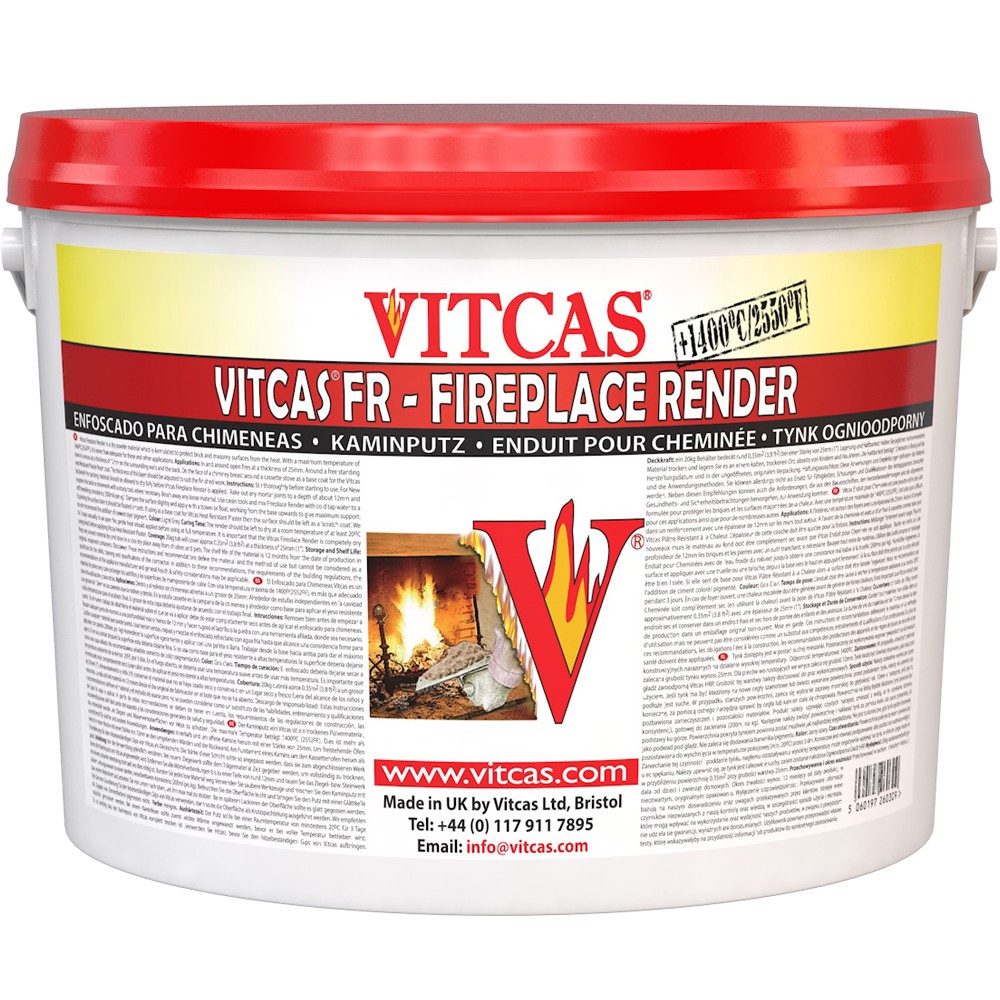
Wall renovation near the fireplace starts with the substrate that will remain under the new layer. Vitcas Fireplace Render is a material for suitable brick and masonry surfaces exposed to heat. It is worth planning its role before choosing a smooth finish, not only after mixing the plaster.
Assess the wall and old remnants
Check the adhesion of existing layers, water marks, and the condition of joints. Mark the area for removal of loose material according to the work plan. A new layer needs proper support, so covering a weak edge should not replace its preparation.
Fireplace Render is a dry mix prepared with water. Documentation describes surface requirements and different thicknesses depending on the application. Do not apply a single thin layer for every wall, device, and size of defect.
Match the surface for the next stage
If the render is to remain visible, choose the finishing according to its instructions. If it will be the base for Heat Resistant Plaster, maintain preparation that ensures the required layer bond. The choice of the next product affects the way the fresh surface is processed.
Heat Resistant Filler is used for the described minor repairs and connections. It does not replace the entire required layer of render in a deep defect. The scope of the correction should correspond to the actual damage and the condition of the wall.
Allow time for the material to be ready
Mix the product with clean tools and maintain the indicated execution conditions. Plan drying and the required preparation before high temperatures. The decoration schedule should result from the readiness of the layers, not just from the date when heating is needed.
Record thickness, substrate, and further finishing. Keep photos before covering important connections. During later repairs, it will be clear whether you are assessing the render, the thin plaster above it, or changes in the wall itself.